Roofline maintenance works best when it feels almost boring. That is a compliment. A boring routine catches the loose joint, the blocked gutter, and the suspicious stain before they turn into the kind of surprise that eats a weekend and a repair budget.
If you are here, you are probably asking the practical questions. How often should you check the roofline? What is safe to do from ground level, and what crosses into “please do not balance on that” territory? Which seasonal jobs matter most, and when is it worth calling in professional help instead of hoping the problem sorts itself out?
The short answer is that small roofline issues usually show up early if you give them a regular look. The National Weather Service flood guidance is a good reminder that water rarely needs much encouragement to go where it should not. The OSHA ladder safety guidance is equally useful because routine maintenance stops being routine the moment access becomes unstable.
This guide gives you the plain version first: a simple monthly and seasonal routine, what to do after storms, which shortcuts to avoid, and the signs that mean it is time to stop squinting at the gutter line from the driveway and book proper help.
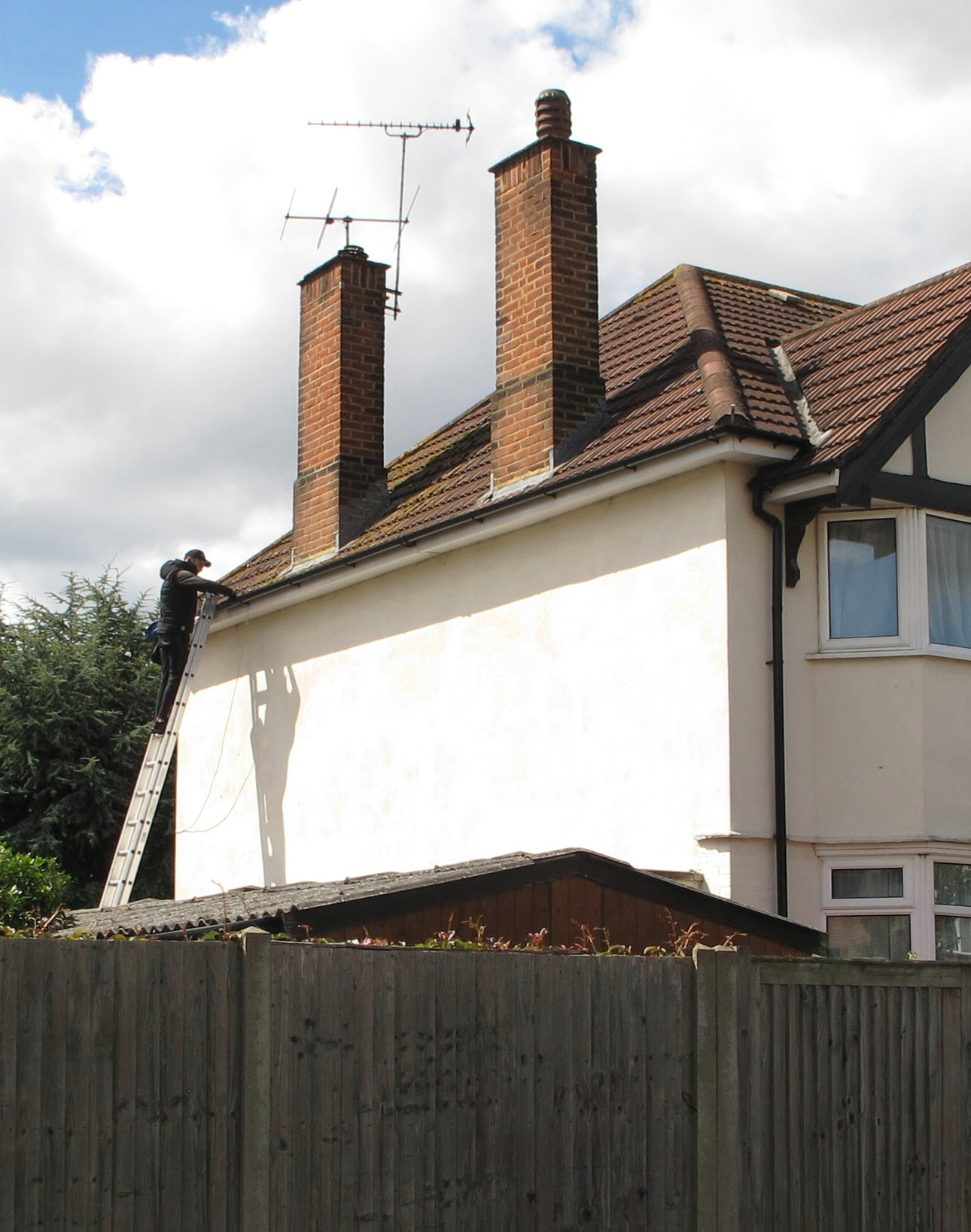
Quick map: what counts as the roofline?
Before getting into the routine, it helps to know which parts you are actually checking. “The gutter bit” is understandable household language, but it covers several parts that fail in different ways.
- Gutters: the channels that collect rainwater at the roof edge.
- Downpipes: the vertical pipes that carry water down to drainage at ground level.
- Fascias: the boards behind the guttering where brackets are often fixed.
- Soffits: the underside sections beneath the fascia, visible when you stand near the wall and look up.
- Joints and outlets: the connector points where water either changes direction or exits into a downpipe.
That matters because the symptom is not always the failed part. Water staining on the fascia might start with a blocked outlet. A dripping corner can be caused by a sagging run a short distance away. The short version: look at the whole route the water takes, not just the spot that looks grumpy.
Monthly and quarterly quick checks
You do not need a dramatic inspection routine. Most homeowners can do a useful check from ground level every month, then a slightly more deliberate walkaround once a quarter.
| Timing | What to check | What you are trying to catch early |
|---|---|---|
| Monthly | Visible debris, sagging gutters, stains on walls, loose downpipes | Small drainage issues before they become overflow |
| Quarterly | Roof edge condition, fascia movement, soffit staining, attic leak signs | Wear that suggests moisture is getting past the obvious places |
| After heavy weather | Branches, slipped sections, blocked outlets, new water marks | Fresh storm damage that needs a quick response |
Start with the gutters
Look for leaves, moss, seed buildup, and sections that no longer sit in a tidy line. Gutters do not need to look perfect, but they should not resemble a reluctant hammock.
- Check for visible debris at the top edge or outlet. A blocked opening can back up an entire run.
- Check for sagging or dipping sections. Standing water adds weight, and weight encourages more sagging.
- Check for streaks below the gutter line. Water tends to leave a record when it escapes repeatedly.
Check roof coverings from a safe distance
You are not climbing up for this part. Use binoculars if that helps, or simply step back far enough to see the roof edge clearly.
- Watch for slipped, cracked, or missing shingles or tiles near the eaves.
- Look for patches of moss or algae that seem to be trapping moisture near drainage paths.
- Notice whether debris is collecting in valleys or near the gutter line.
The roof and roofline work as one system. If the roof covering is shedding debris or directing water poorly, the guttering gets the consequences.
Take a quick look in the attic or loft
This is one of the least glamorous checks and one of the most useful. A small leak often announces itself inside before the exterior looks especially dramatic.
- Look for water stains, damp patches, or dark marks near the roof edge.
- Notice new musty smells after rain.
- Check for daylight showing where it should not.
You are not trying to diagnose the entire roof structure here. You are simply looking for clues that the outside problem has already started sending postcards indoors.
What to do after a storm
After wind, heavy rain, or a spell of winter weather, the best follow-up is quick and calm. This is not the moment to start an ambitious repair project. It is the moment to find out whether anything changed.
- Scan for fallen branches or lodged debris. Even small branches can block outlets or twist brackets.
- Check the gutter line for fresh sagging or separation. Movement after a storm is a useful clue, not an aesthetic issue.
- Look at the base of downpipes. If water pooled there during the storm, the drainage path may still be partially blocked.
- Check walls and soffits for new staining. Fresh marks often show you exactly where overflow or leakage occurred.
The National Weather Service thunderstorm safety guidance is a good general reminder not to inspect during active severe weather. Wait until conditions are calm, visibility is decent, and the surfaces around the property are not slippery enough to turn a five-minute check into slapstick with consequences.
Seasonal tasks that keep the routine realistic
A year-round plan is easier to keep when the jobs match the season. Think of it less as a grand maintenance program and more as a few recurring appointments with your future self.
Spring: clear winter leftovers and check for growth
Spring is a sensible time to look for debris, blocked outlets, and moss or algae growth near the eaves. Freeze-thaw cycles and winter storms can loosen sections without making the damage obvious from a casual glance.
- Clear remaining twigs, moss, and roof grit from accessible low sections.
- Inspect for staining or peeling finishes on fascias and soffits.
- Check whether downpipes discharge cleanly away from the building.
The EPA guidance on downspout drainage is useful here because it focuses on the part people skip: the system is not truly working if water reaches ground level and then immediately hangs around the wall like an unwanted houseguest.
Summer: spot small faults while conditions are easier
Summer can be the easiest time to notice movement, gaps, and staining because you are not battling constant wet weather. It is also the best time to book maintenance before autumn turns every leaf into gutter confetti.
- Check brackets, joints, and corners for movement or visible gaps.
- Note any recurring stains that return after cleaning.
- Trim back vegetation that drops debris directly onto the roofline, if it can be done safely from ground level.
Autumn: get ahead of leaf buildup
This is the season when a sensible maintenance plan earns its keep. Cleaning after the gutters are already packed with wet leaves is possible, but it is a bit like waiting until the sink overflows to remember the dishes exist.
- Clear gutters before leaf fall peaks, then recheck once the trees finish shedding.
- Watch outlets and corners closely, because those clog first.
- Keep ground drains and gullies clear so water has somewhere to go.
Winter: focus on observation, not risky heroics
Winter is not the season for brave improvisation. If access is icy, windy, or awkward, stop. Your winter job is mainly to observe symptoms and call for help when something looks wrong.
- Watch for overflow during rain. That often tells you more than a dry-weather inspection.
- Check for loose sections after storms or freeze-thaw spells.
- Make note of recurring problem spots so they can be addressed properly when safe.
What to avoid
A useful roofline routine includes knowing what not to do. Plenty of avoidable damage starts with good intentions and poor method.
- Avoid climbing ladders without proper footing, help, and confidence in the setup. If the setup feels improvised, it is improvised.
- Avoid harsh chemicals for moss, algae, or staining unless they are specifically appropriate for the material and used exactly as directed. The aim is maintenance, not turning the guttering into a chemistry experiment.
- Avoid pressure washing delicate roofline components at close range. Water forced the wrong way can drive moisture into places you were trying to protect.
- Avoid patching over recurring leaks without finding the cause. Repeated symptoms usually mean the real fault is elsewhere in the run.
- Avoid repairs that are beyond your skill level or access limits. There is no prize for discovering the exact moment a small DIY task becomes a rescue story.
When professional maintenance is worth it
Professional help is usually worth it when access is awkward, the issue keeps returning, or the symptoms suggest more than simple debris. A good inspection can separate a straightforward clean-and-adjust job from a repair problem before more materials are affected.
Call a professional if you notice any of the following:
- Gutters pulling away from the fascia or visibly sagging.
- Leaks at several joints, corners, or outlets.
- Soft, swollen, or stained fascia boards.
- Water stains in the attic or on upper interior walls.
- Persistent overflow after debris has been cleared.
- Access that involves significant height, conservatories, extensions, or fragile surfaces.
If that sounds familiar, the sensible next move is to contact RC Grant & Sons with a clear description of the symptom, where it appears, and whether it shows up in all rain or only during heavier weather. If you want a quick overview of the wider services and roofline components involved, the home page is a useful starting point.
A simple routine you can actually keep
If you want the short version, this is the routine most homeowners can stick with:
- Do a ground-level visual check once a month.
- Do a more deliberate inspection each quarter, including the attic or loft.
- Check again after storms for new movement, debris, or staining.
- Clear accessible debris in spring and autumn before it becomes compacted.
- Escalate early when the issue involves height, repeated leaks, or visible structural movement.
The goal is not to prevent every possible problem forever. The goal is to catch ordinary wear early, keep water moving properly, and avoid the expensive chain reaction that starts when a small roofline issue is ignored for one season too many.
That is the plain version. A little consistency, a little caution, and a healthy suspicion of “it will probably be fine” usually go a long way.