If you want a cleaner roofline assessment, the fastest win is not a longer phone call. It is a better first message.
Most delays in a booking come from the same place: the contractor has not been given enough detail to understand the problem before the visit. Is the issue local or spread across an elevation? Does it happen only in heavy rain? Is there clear access, or is the rear corner boxed in by a conservatory and a row of potted optimism? The more plainly you describe the site, the better the assessment can be planned.
This matters because roofline issues are not solved by vibes. They are solved by a sequence: identify the area, understand how water is behaving, check whether access is straightforward, then decide whether the next step is cleaning, repair, or replacement. If access is involved, the HSE work at height guidance is a useful reminder that planning is part of the job, not a decorative extra.
In this article, I will keep the intake process simple. You will see what photos to take, what location details matter, how to describe when the issue started, what to say about previous repairs, and how to note access constraints so the visit is easier to arrange. If you need to follow up after reading, the contact page is the place to send the details that matter most.
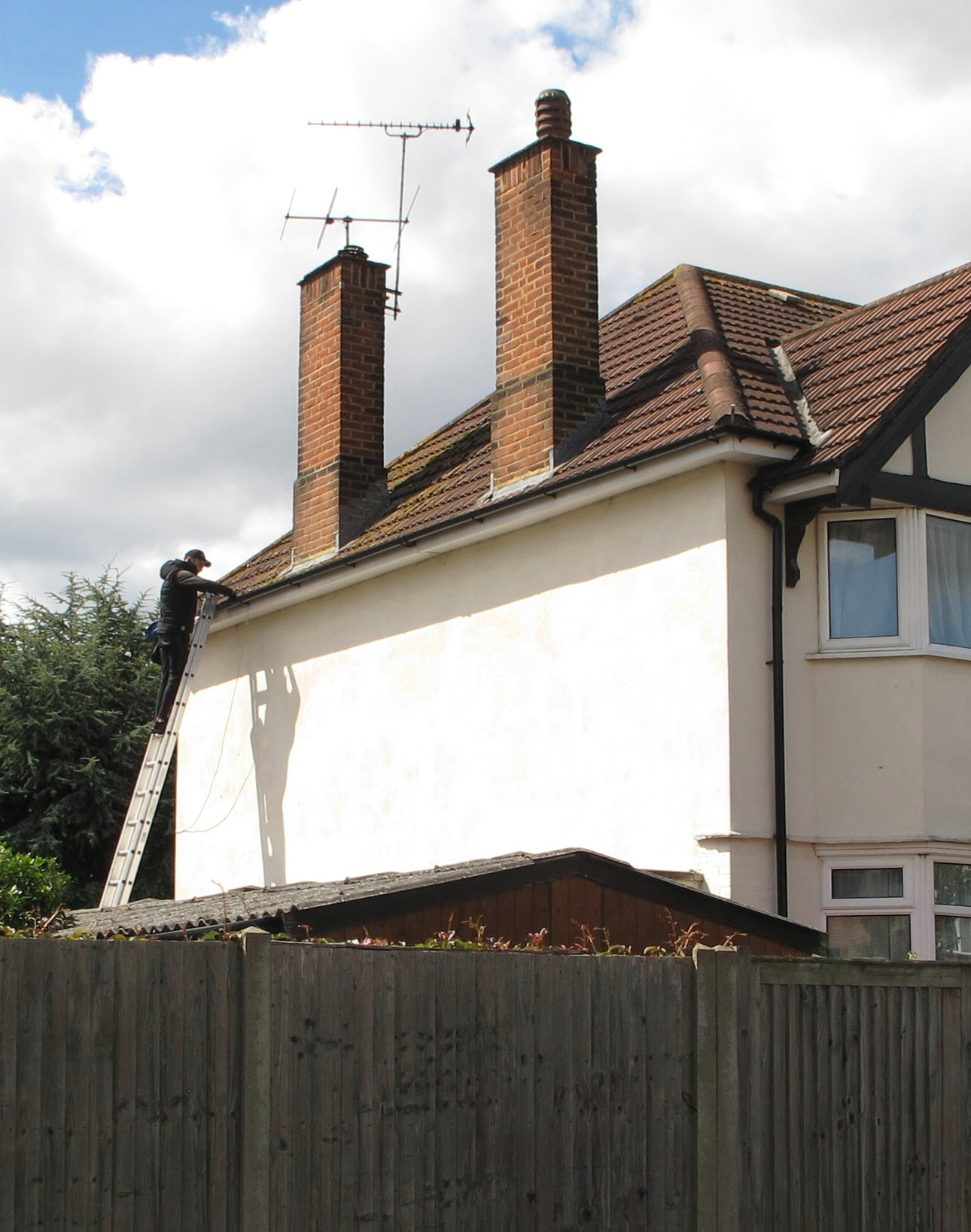
Quick terminology before you send anything
One reason people under-explain roofline problems is simple: the vocabulary is doing a poor job of being helpful. A few terms are worth separating up front so you can describe the issue without translating half a sentence later.
| Term | Plain meaning | Why it helps your booking |
|---|---|---|
| Rain gutter | The channel that carries water away from the roof edge. | Useful when the problem is overflow, dripping joints, or standing water. |
| Fascia | The board or face at the roof edge that supports and finishes the line. | Helpful when paint, timber, or external cladding looks soft, stained, or warped. |
| Soffit | The underside of the roof overhang. | Useful when you see gaps, vents, staining, or a tidy finish that no longer looks tidy. |
If you are not sure which component is causing the issue, do not guess. Say where the symptom appears and let the inspection sort out the rest. “Somewhere near the back when it rains” is a weather report, not a location.
Photos to take before you book
Clear photos from your phone are the single best thing you can send. They help the inspector see the scale of the property, the elevation involved, and whether the problem is a single point or part of a longer run.
I recommend sending four kinds of photos:
- A wide shot of the whole elevation. This shows the roofline in context and helps identify which wall or side of the building is affected.
- A mid-range shot of the specific area. If the rear gutter is overflowing above a conservatory, a photo that shows that relationship is far more useful than a close-up of a random corner.
- A close-up of visible damage. Look for staining, sagging, gaps, cracked joints, peeling finish, or anything that looks out of alignment.
- A repeat shot from a second angle if possible. One angle often hides the thing you are actually trying to show. Buildings enjoy being difficult in that particular way.
If you can do so safely from ground level, take the picture in daylight and include a little more of the surrounding wall or garden than you think you need. The extra context usually helps more than the perfect crop. That is also why a clean mobile workflow can be useful for businesses that handle a steady stream of enquiries; for example, AI consulting services can help define how photos, notes, and follow-up questions move through an intake process without turning it into a pile of disconnected messages.
There is no need to stage the image like a magazine cover. A sensible phone photo is enough. What matters is clarity, not glamour. Roofline problems do not improve because the angle is artistic.
Where the problem shows up
Location is the core of a useful enquiry. If the contractor knows which wall, corner, or roof edge is affected, the assessment can be planned faster and with fewer assumptions.
When you describe the location, be specific in the way a site note would be specific:
- Front, rear, left, or right elevation. Pick the side first, then narrow it further if needed.
- Near a particular feature. Conservatory, porch, bay window, extension, garage, chimney, or boundary wall all matter.
- At a certain height. Ground-floor run, first-floor eaves, side return, or high rear corner can affect access and equipment.
- At a junction or end point. Corners, outlets, downpipes, and joins are common places for the first visible symptom.
If the symptom shows up in one place but you suspect the cause is elsewhere, say that too. Overflow at one corner can be caused by a blocked outlet further along the run. A stain under one section can be caused by movement at a joint that sits a few metres away. Roofline systems like to spread the blame around.
It also helps to say whether the issue is visible from the street, only from the garden, or only from a specific side access. That small note can determine whether the first visit is a simple inspection or a slightly more complicated site plan.
When it started and what changed
Timing is useful because roofline problems often have a pattern. Something that has been happening for two winters is a different conversation from something that appeared after last week’s storm.
When you write or call, include:
- When you first noticed it. Approximate is fine. “Late autumn” is better than silence.
- What changed recently. Heavy rain, wind, a fallen branch, building work, new gutters, repointing, or nearby tree growth can all be relevant.
- Whether the problem is getting worse. A mark that is spreading, a joint that leaks more often, or a section that has started to sag deserves a more urgent look.
- Whether the issue is seasonal. Some symptoms appear only during persistent rain or wind-driven weather, which helps narrow the likely cause.
If you have photos from different dates, even better. A before-and-after record is often more helpful than a paragraph of memory. The wall tells a story, but it is not always a neat one.
For access planning around changing weather, a practical source such as the HSE safe use of ladders and stepladders guidance can help explain why a visit should be planned around stable ground, sensible reach, and a secure setup rather than a heroic mood.
Previous repairs and visible materials
Older repairs are not a problem to hide. They are one of the most useful things to mention, because they explain what has already been tried and what materials may already be in place.
Tell the contractor about any of the following:
- previous gutter cleaning or clearing,
- patch repairs to joints or corners,
- replacement sections added to one side only,
- painting, sealing, or coating applied to fascia or soffit boards,
- work on the roof edge, tiles, verges, flashing, or nearby rainwater goods,
- any known material changes, such as timber, uPVC, or composite parts.
The reason is straightforward: visible symptoms do not always match the root cause. A neat patch can hide a recurring movement issue. A replacement section can solve one leak while exposing a mismatch at the next joint. A coated fascia can look respectable from the driveway while the substrate behind it tells a more interesting story.
If you know the product or system used before, mention that too. You do not need to become the building archaeologist. Just give enough detail to avoid repeating the same failed fix in a new costume.
For people who like an extra sense-check before they call, the HSE pre-use ladder check guidance is a useful reminder that any closer look should start with the equipment and setup, not the ladder and a prayer.
Access notes and best times for a visit
Access details are the quiet part of the booking that decides whether the visit is smooth or awkward. A roofline assessment can be perfectly simple on paper and still become a nuisance if there is no clear way to reach the back elevation.
Useful access notes include:
- How to reach the affected area. Side gate, rear path, shared drive, alleyway, or garden access.
- Anything that blocks the route. Locked gates, narrow passages, parked vehicles, bins, planters, pets, or stored materials.
- Ground conditions. Slopes, loose gravel, wet paving, fragile landscaping, or uneven surfaces can affect how the inspection is carried out.
- Nearby hazards. Overhead cables, fragile sheds, glass roofing, and low branches all belong in the note, not in the surprise category.
- Best times for a visit. Morning, afternoon, or a window when the light is better and someone can be home.
When you can, offer two or three time windows rather than one exact slot. That makes scheduling easier and reduces the chance that everyone has to play calendar tennis for a week.
If you want to be extra helpful, mention whether the concern is visible in dry weather or only after rain. An inspector planning a visit can use that to decide whether a same-day look, a dry-day check, or a follow-up after rainfall will tell the clearest story.
A simple intake form that actually works
There is no need to overcomplicate the first message. A good intake note is usually just five clean lines.
| Field | What to include | Example |
|---|---|---|
| Photos | Wide shot, mid shot, close-up | Rear elevation, corner above conservatory, stained joint |
| Location | Which wall or roof edge | Back left corner above kitchen extension |
| Timing | When it started and whether it is worsening | First noticed after storms two weeks ago |
| Previous work | Any cleaning, patching, or replacement | Gutter cleaned last year, one joint sealed in spring |
| Access | How the area is reached and what might block it | Rear access through side gate, narrow path, parked car on weekdays |
If that sounds almost too simple, good. Simplicity is the point. A shorter request that contains the right facts is more useful than a long one full of general concern and no location. Nobody needs a novel when they need a clear site visit.
For the visitor who is also trying to keep office admin tidy, there is a reason this same structure works so well in customer communication and job tracking. The details that matter on the first call are usually the same details that matter when planning the visit and preparing the estimate. That is why a good intake workflow is valuable even before the first ladder comes off the van.
What to say if you are not sure what you are looking at
Plenty of people do not know whether they are seeing a gutter issue, a fascia problem, or water coming from somewhere else entirely. That is fine. You do not need to diagnose the system yourself.
Use plain language:
- “Water appears to spill from one corner during heavy rain.”
- “There is staining below the eaves on the rear wall.”
- “A section looks bowed or lower than the rest.”
- “The problem began after the last storm.”
- “There was previous patch work in this area.”
That is enough to get the conversation started. The point of the assessment is to convert a vague symptom into a practical recommendation, not to ask you to become a roofline specialist before lunchtime.
If you are also comparing service options or want to understand the broader roofline side of the business, the home page is a useful starting point for seeing the kind of work RC Grant and Sons handles across different property types.
What not to include
There is a difference between useful detail and noise. If the first message turns into a full autobiography of every maintenance job since 2009, the actual booking detail tends to disappear in the middle of it.
Try to avoid:
- Long guesses about the cause. “I think the fascia has failed because the wind was from the east” is less useful than “water is showing on the rear wall after rain.”
- Repeated apologies. The system does not care whether you are sorry. It cares where the symptom is.
- More than one problem in one sentence. If the front, side, and rear all have issues, list them separately so nothing gets lost.
- Very old history that no longer affects the site. Relevant repairs matter; unrelated memories do not.
If there are multiple issues, numbering them helps. For example: 1) rear gutter overflow above kitchen extension, 2) stain below front soffit, 3) loose section beside the porch. That format is almost annoyingly effective, which is usually how the best admin works.
You can also note whether the concern is urgent or just worth checking. That does not mean exaggerating. It simply helps the contractor decide whether the next step is immediate attention, routine inspection, or a planned visit that can sit in the calendar without drama.
Final checklist before you send the enquiry
Before you submit your request, make sure you have covered these five points:
- At least one wide photo of the relevant elevation.
- A clear note of where the problem appears.
- When it started, and whether it has changed recently.
- Any previous repairs or visible materials you already know about.
- Access notes and the best time for a visit.
If you can add one more thing, add the weather pattern. “Only after heavy rain” is often more helpful than “intermittent issue.” A roofline is a water-management system, so the way the water behaves is usually the clue that matters most.
If the problem looks local but the access is awkward, say that plainly too. A narrow side passage, a locked rear gate, or a conservatory roof can all change the visit plan even when the issue itself is small. Good assessments are built on the actual site, not on the assumption that every wall is easy to reach and every ladder lives a charmed life. That is also why a clear first message helps the contractor decide whether the right next step is a brief inspection, a more carefully planned site visit, or a quotation based on the photos and notes you have already sent.
The best enquiries are not the longest ones. They are the ones that let the contractor understand the site before anyone turns up. If you want a proper assessment, send the detail that changes the plan: photos, location, timing, previous work, and access. Everything else is decorative.
When you are ready, use the contact page and keep it simple. A few clear notes now usually save a round of clarifying questions later, and that is one of the few small victories office admin can still claim with a straight face.