If you are comparing roofline quotes this year, the details matter more than the headline price. Fascias, soffits, gutters, downpipes, and the eaves all work as one system, and a weak link can show up as staining, overflow, or a finish that simply looks tired. The good news is that many roofline repairs are ordinary maintenance rather than major alteration work, so a clear scope and a careful inspection go a long way.
Homeowners usually start with the same questions: What does each roofline part do? Which problems are simple maintenance? When does a quote need more detail? And how do I know if a repair is worth doing now? UK guidance on building regulations makes an important distinction between routine maintenance and notifiable work, and gutters and downpipes are specifically listed among items that often do not need approval when the work stays within repair and maintenance territory. See the GOV.UK guidance on when you do not need building regulations approval and the broader building regulations approval guidance.
This guide will help you read a roofline quote, understand the main components, spot common warning signs early, compare material options, and ask the right questions before work starts. If you want the service overview first, you can also visit the services page, the gallery, or the contact page for an inspection request.
What the roofline includes
Roofline is the working edge of the roof. It protects the structure below, carries water away from the building, and helps the property look finished rather than exposed. The terms are easy to mix up, so I keep them plain:
| Term | What it is | Why it matters |
|---|---|---|
| Fascia | The board fixed along the roof edge, often supporting the gutter | Helps carry loads and creates a clean edge finish |
| Soffit | The underside panel beneath the fascia and eaves | Covers roof timbers and may support ventilation |
| Bargeboard | Board fixed to the gable edge | Protects the verge and completes the roof outline |
| Gutter | The channel that collects rainwater | Stops water from spilling down the walls |
| Downpipe | The vertical pipe that carries water to drainage | Moves rainwater away from the building safely |
| Eaves | The lower edge of the roof that overhangs the wall | The junction where weather protection has to be reliable |
For a simple technical overview of roof components, the roof article on Wikipedia is a useful neutral reference, but a contractor should always assess the actual building rather than the textbook version of it. On the product side, manufacturers such as Marley publish guidance on roofline and rainwater systems that can help you compare material choices without getting lost in trade jargon.
The first signs homeowners usually notice
Most roofline issues announce themselves in small ways before they become expensive. The signs below do not automatically mean a major job, but they do mean the system needs attention.
- Overflowing gutters during rain, or water running past the gutter line.
- Sagging sections where brackets, joints, or fixings are no longer holding shape.
- Peeling paint or staining on timber fascia or bargeboard surfaces.
- Water marks or damp patches on exterior walls below the roof edge.
- Debris build-up that blocks water movement and traps moisture.
- Loose or cracked joints at gutter connections and corners.
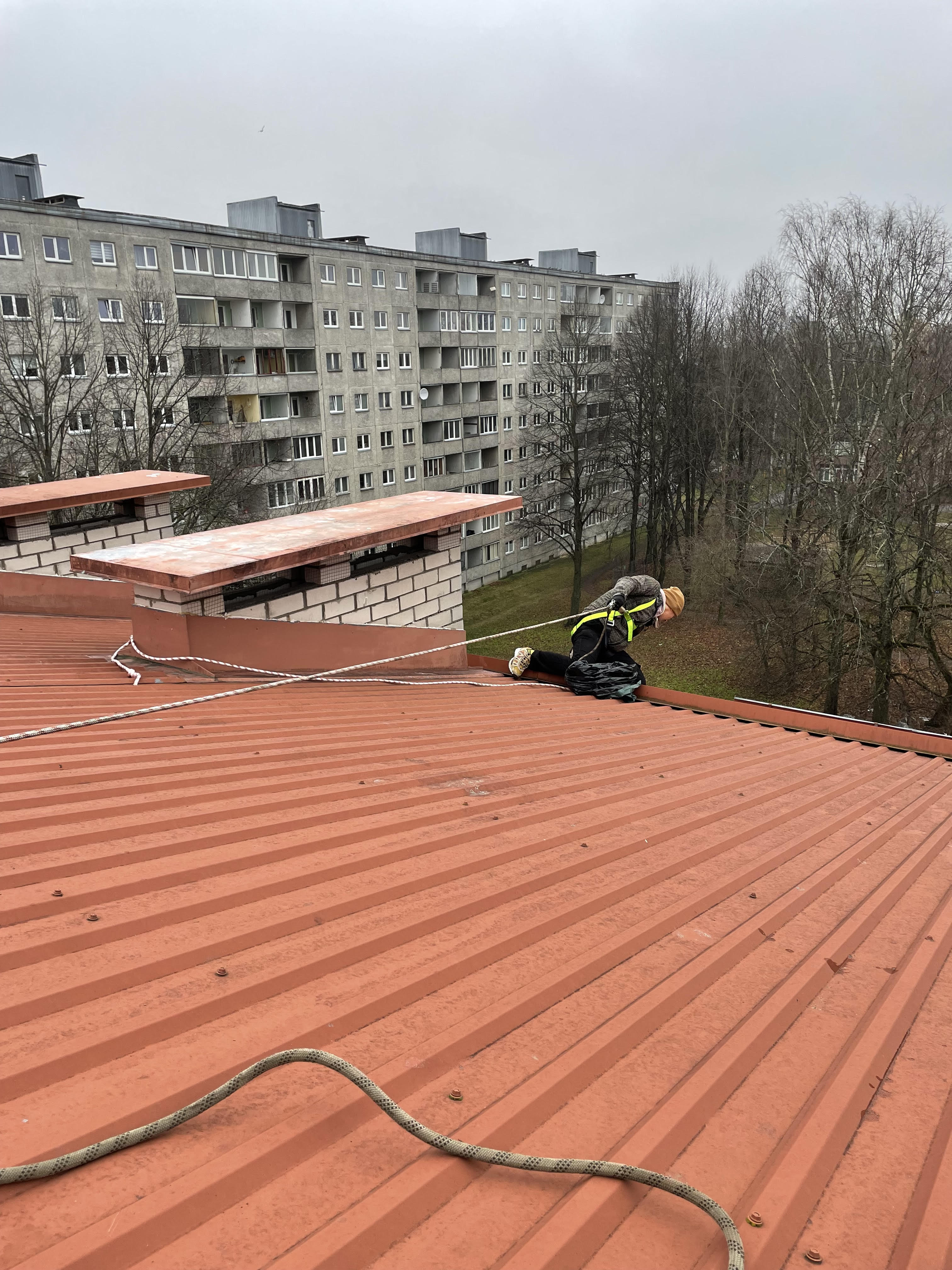
One useful comparison point is a close inspection photo. A damaged joint may look minor from the ground, but once you zoom in, the failure mode is easier to see. The image below shows the kind of detail that matters when you are comparing quotes.

Maintenance, repair, or something bigger?
Not every roofline job needs the same level of approval or disruption. That is where the practical distinction matters. Routine cleaning, resealing, replacing a broken gutter bracket, or swapping a damaged run of guttering is usually maintenance or repair. More substantial changes, such as altering the roof edge structure or changing the building’s appearance in a way that goes beyond replacement, may need a closer look at local rules, building control, or planning considerations.
That is why it helps to keep the scope clear. Ask the contractor what exactly is being replaced, what will remain in place, and whether the work is a like-for-like repair or a broader upgrade. The permitted development technical guidance is useful background if your project sits near the line between maintenance and alteration.
A simple rule of thumb
| Work type | Typical example | Usually needs more review? |
|---|---|---|
| Routine maintenance | Cleaning gutters, clearing debris, resealing joints | No, usually not |
| Like-for-like repair | Replacing a damaged fascia board or gutter run | Often no, but check the scope |
| Broader alteration | Changing the roof edge design or structure | Possibly yes |
That is the line to hold. A careful quote should tell you which side of it your job sits on.
Materials: timber, uPVC, and composite
The right material depends on the property, the look you want to preserve, and how much maintenance you want to carry. I would not treat one material as the default answer for every house.
Timber
Timber can suit period properties and homes where the original appearance matters. It can be painted and detailed well, but it asks for upkeep. If the coating fails, moisture becomes the opponent.
uPVC
uPVC is common because it is light, widely available, and usually lower maintenance. It suits many standard homes, though the finish and profile need to match the building sensibly. Cheap-looking replacements can reduce curb appeal even if they function fine.
Composite
Composite options aim to balance durability and appearance. They may cost more up front, but on some properties they give a steadier long-term baseline and less frequent repainting or treatment.
For visual comparison, a contractor can usually show examples of installed systems or provide product brochures. If you are comparing with a commercial property or a larger building, the gallery is a better place to judge finish quality than a sales claim.
What to ask before you accept a quote
A good roofline quote should read like a plan, not a guess. Ask for the scope in writing and compare the answers item by item.
- What exactly is included? Cleaning, repair, full replacement, or only selected sections?
- How will access be handled? Scaffolding, tower access, or simple ladder work where safe and appropriate?
- Will waste be removed? Old boards, fixings, and packaging should not become your problem by default.
- Will the finish match the existing house? This matters especially on visible front elevations.
- What guarantee or workmanship cover is offered? Get the terms in plain English.
- What is the plan for rainwater flow during the job? A temporary disruption should not create avoidable water problems.
If you want a wider reference point for contractor standards, the National Federation of Roofing Contractors publishes consumer-facing guidance that can help homeowners ask sharper questions without becoming a trade specialist overnight.
A seasonal inspection checklist
Spring and autumn are the two moments I would keep on the calendar. That is enough to catch most common issues before they become visible indoors.
- Check the gutter line after rain.
- Look for sagging, staining, or plant growth in the gutters.
- Inspect the fascia and soffit from ground level for peeling, cracks, or distortion.
- Confirm that downpipes discharge cleanly and are not blocked at the base.
- Note any damp marks, especially below joints or corners.
- Book a closer inspection if the same fault keeps returning.
That last point matters. Repeated problems usually mean the system has a baseline issue rather than a one-off blockage. No drama required; just better diagnosis.
How RC Grant and Sons approaches roofline work
For homeowners, the right roofline service should feel orderly: inspect, explain, scope, repair, and leave the edge of the building better protected than before. That includes the right parts for the property, the right fix for the failure mode, and a finish that does not fight the rest of the house.
If you are planning work on fascias, soffits, gutters, or a broader roofline upgrade, the safest next step is to request an inspection and compare the proposed scope against the issues you have actually seen. You can start with the about page, review the services page, or use the contact form to ask for a quote.
Key points to remember
- Roofline parts work as one system, not as isolated components.
- Overflowing gutters, stains, and sagging are common early warning signs.
- Many repair and maintenance jobs are routine, but bigger alterations deserve a scope check.
- Timber, uPVC, and composite each have practical trade-offs.
- A good quote should explain scope, access, waste removal, matching finish, and guarantees.
Bottom line: a careful roofline inspection now is cheaper than guessing later. If you want the work done cleanly and with the least disruption, ask for a clear written scope before anyone starts lifting boards or disconnecting gutters.
Sources and further reading: GOV.UK: when you do not need approval, GOV.UK: building regulations approval, GOV.UK permitted development guidance, NFRC, and Marley roof systems.